High Street vs Mall Retail Space: Which is Better in India?
Choosing between a high street showroom and a mall retail space? Compare footfall quality, hidden cost structures (CAM), and operational control in our detailed guide.
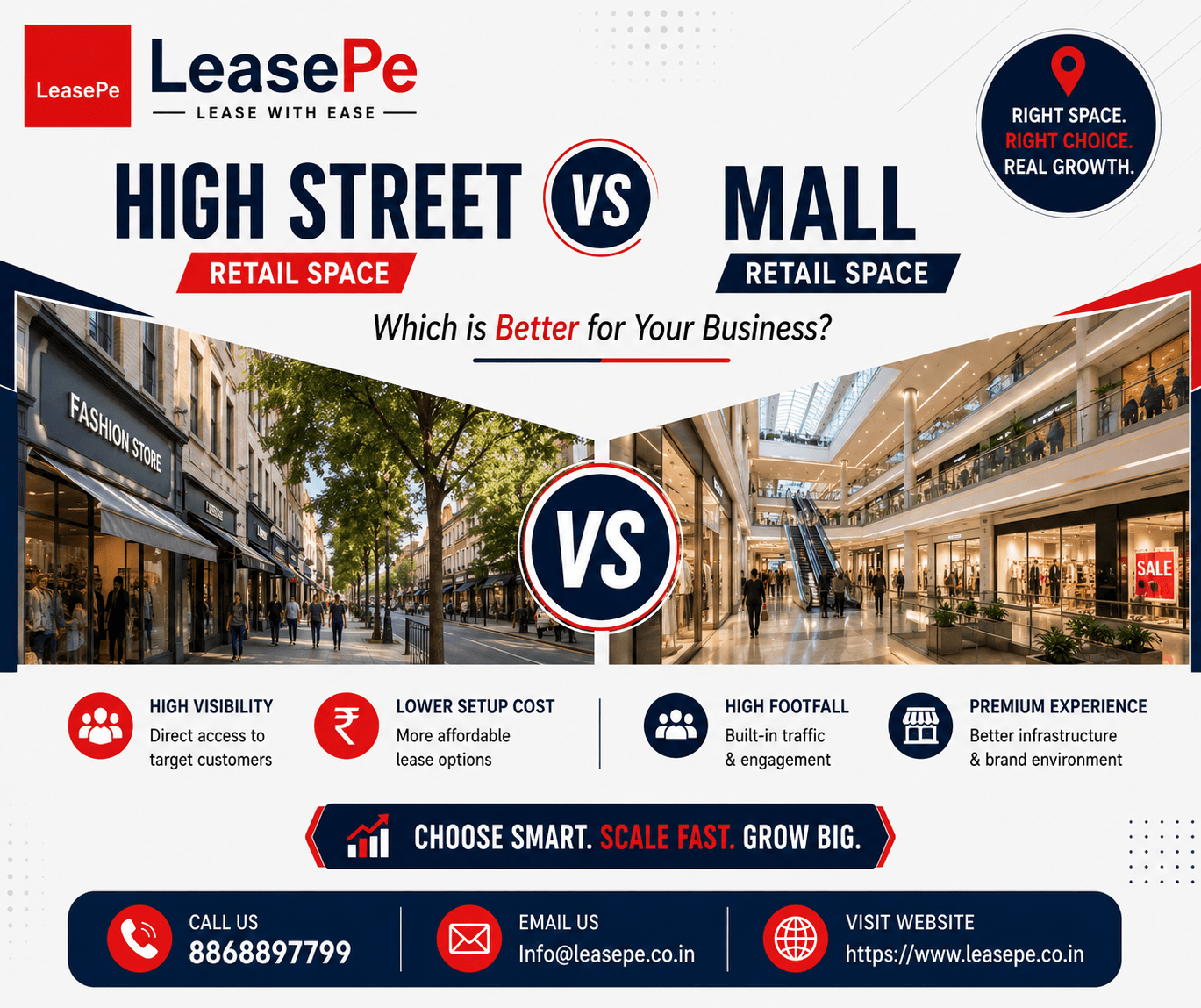
High Street vs Mall Retail Space: Which is Better?
If you are expanding a retail brand in India, choosing your physical home is a monumental decision. It is the classic retail dilemma: Should you lease a prominent shop on a bustling high street, or secure a premium slot inside a modern, air-conditioned shopping mall?
In India's retail landscape, both ecosystems thrive under completely different mechanics. Selecting the wrong format can result in unsustainably high overheads or, conversely, a complete lack of relevant footfall.
To help you find the perfect commercial space on lease, we break down the critical differences between High Street and Mall spaces across three key parameters: Footfall Dynamics, Cost Structures, and Operational Control.
1. Footfall Dynamics: Intent vs. Recreation At first glance, both locations promise massive crowds. However, the type of customer and their spending mindset vary dramatically between these formats.
High Street Footfall (High Purchase Intent) People visit prominent high streets (like Connaught Place in Delhi, Khan Market, or Indiranagar in Bengaluru) with a specific, targeted agenda.
The Crowd Profile: Shoppers usually have a pre-planned purchase in mind. They know the brand is there, they park their vehicle (or exit the transit line), walk straight into the showroom, complete the transaction, and leave.
The Conversion Rate: Footfall numbers may fluctuate during extreme weather (such as severe summer heat or heavy monsoons), but the overall customer-to-buyer conversion rate remains exceptionally high.
Mall Footfall (High Recreational Volume) Malls are designed as climate-controlled lifestyle destinations rather than simple shopping centers.
The Crowd Profile: Many visitors go to malls for casual entertainment, air-conditioned comfort, dining at the food court, or watching a movie. They are "browse-heavy" but "purchase-light."
The Conversion Rate: While a mall guarantees steady, year-round pedestrian traffic regardless of the weather, a significant percentage of this traffic is composed of window shoppers. You will need highly engaging visual merchandising to convert passive strollers into active paying customers.
2. Cost Structures: Base Rent vs. Triple Net Overhead Renting a retail outlet is not just about writing a single check for rent. The financial breakdown between these two spaces is vastly different.
HIGH STREET SHOPPING MALL ┌─────────────────────────┐ ┌─────────────────────────┐ │ │ │ │ │ ● Moderate Base Rent │ │ ● Lower Base Rent │ │ ● Minimal CAM Charges │ VS │ ● High Revenue Share % │ │ ● Lower Utilities │ │ ● Heavy CAM Overhead │ │ │ │ ● Mandatory Promo Fee │ └─────────────────────────┘ └─────────────────────────┘
Keep reading
Related insights

real estate
Commercial Property Climate Resilience: What Businesses Should Know | LeasePe
Discover how heat, flooding, power reliability and building resilience can affect commercial property leasing in India. Learn what businesses should evaluate before choosing a space.
real estate
Office Location Strategy: Why Your Commercial Location Is a Talent Decision | LeasePe
Your office location affects more than rent. Learn how commute, talent access, workplace experience and location psychology influence commercial leasing decisions in India.