High Street vs Mall Retail Space: Best Cities & Micro-Markets
High street vs mall retail space? Discover how top brands like Tata’s Zudio, Reliance Tira, and Lululemon choose their next locations in India's top cities.
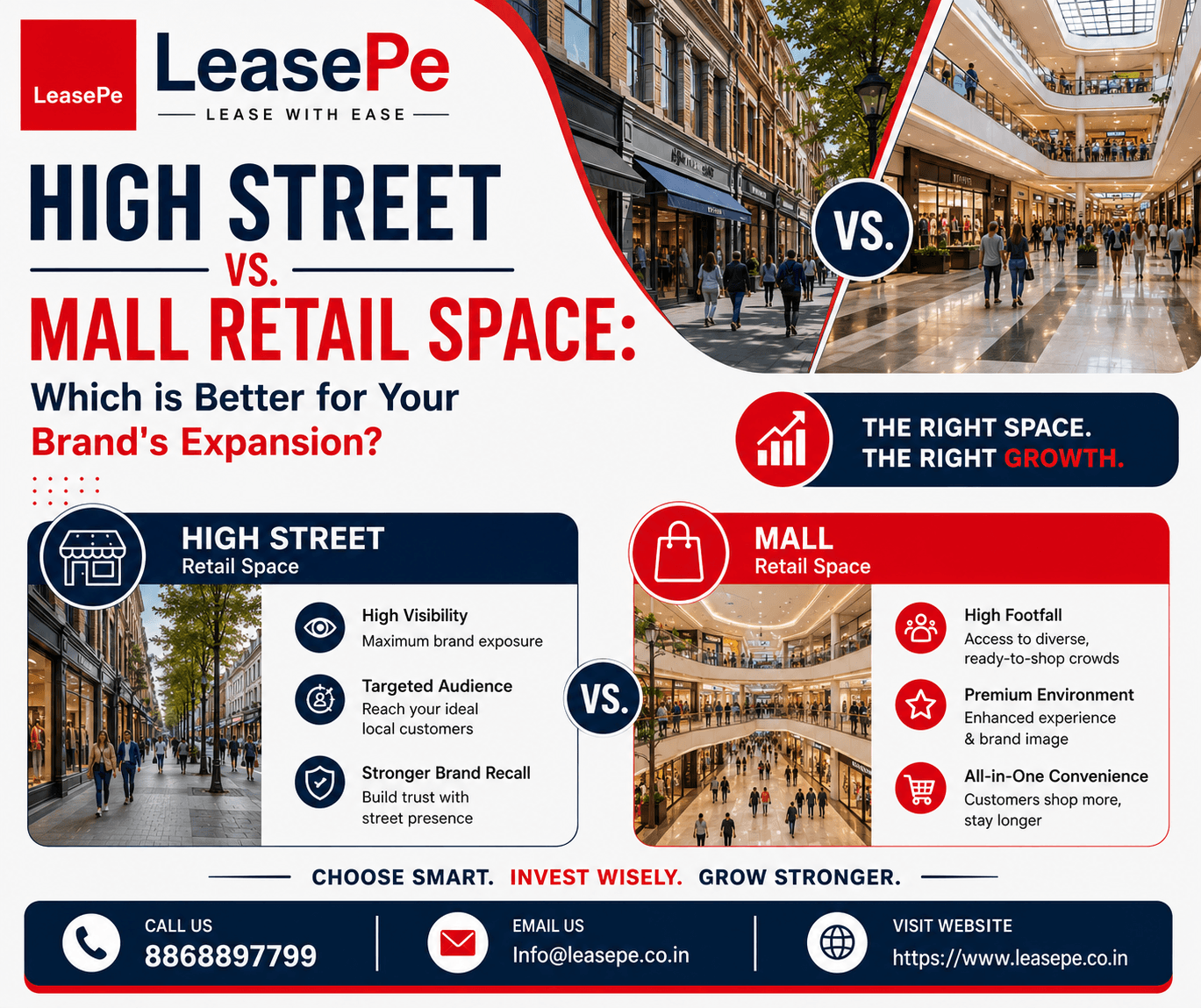
High Street vs. Mall Retail Space: Which is Better for Your Brand's Expansion?
When global giants like Lululemon (partnering with Tata CLiQ) or local hyper-growth engines like Tata’s Zudio (which recently breached $1 billion in revenue) plan their footprint, they don’t just ask which city to enter. They ask a much more critical structural question: High street or shopping mall?
In India’s rapidly evolving retail landscape, this single choice defines your unit economics. With over 46 million square feet of Grade A mall supply projected to hit the market by 2030, but a massive short-term supply bottleneck leading to tight vacancies, the battle between these two formats has never been more competitive. In fact, real estate data reveals that high streets captured nearly 49% of all retail leasing activity, with shopping malls trailing at 40% due to a temporary shortage of fresh institutional-grade mall deliveries.
For brand founders, expansion heads, and smart landlords utilizing the LeasePe ecosystem, choosing between these formats requires a deep-dive product manager's mindset.
RETAIL FORMAT TRADE-OFFS ┌───────────────────────────────────┬───────────────────────────────────┐ │ HIGH STREET RETAIL │ SHOPPING MALL RETAIL │ ├───────────────────────────────────┼───────────────────────────────────┤ │ • 49% of National Leasing │ • 40% of National Leasing │ │ • Zero CAM Overhead Traps │ • Programmed, High-Intent Traffic │ │ • Higher Brand Autonomy & Signage │ • Built-In Security & Utilities │ │ • Best For: High-Visibility D2C │ • Best For: Luxury & Experiential │ └───────────────────────────────────┴───────────────────────────────────┘
1. The High Street Format: Autonomy, Agility, and Localized Cults
High streets—such as Indiranagar 100 Feet Road (Bengaluru), Linking Road (Mumbai), or Khan Market (Delhi)—are the cultural beating hearts of urban Indian commerce.
The Pros: Zero CAM Overhead Traps: Unlike shopping malls, high streets do not burden your balance sheet with heavy Common Area Maintenance (CAM) charges, which can eat up to 15-20% of your total rental outflow in premium malls. Operating Hour Freedom: You dictate your own doors-open, doors-closed times. If you are an F&B operator or an activewear flagship, you are not bound by the strict 11 AM to 10 PM mall operational mandates. Unmatched Brand Visibility: High streets give you massive vertical facade space. Your storefront is your billboard, capturing immediate eyeballs from vehicular and pedestrian traffic.
The Cons: Infrastructure Fragmentation: The biggest loophole in high streets is the infrastructure. You are entirely responsible for independent water connections, private backup generators, local parking permissions, and navigating fragmented multi-landlord ownerships.
Keep reading
Related insights

real estate
Commercial Property Climate Resilience: What Businesses Should Know | LeasePe
Discover how heat, flooding, power reliability and building resilience can affect commercial property leasing in India. Learn what businesses should evaluate before choosing a space.
real estate
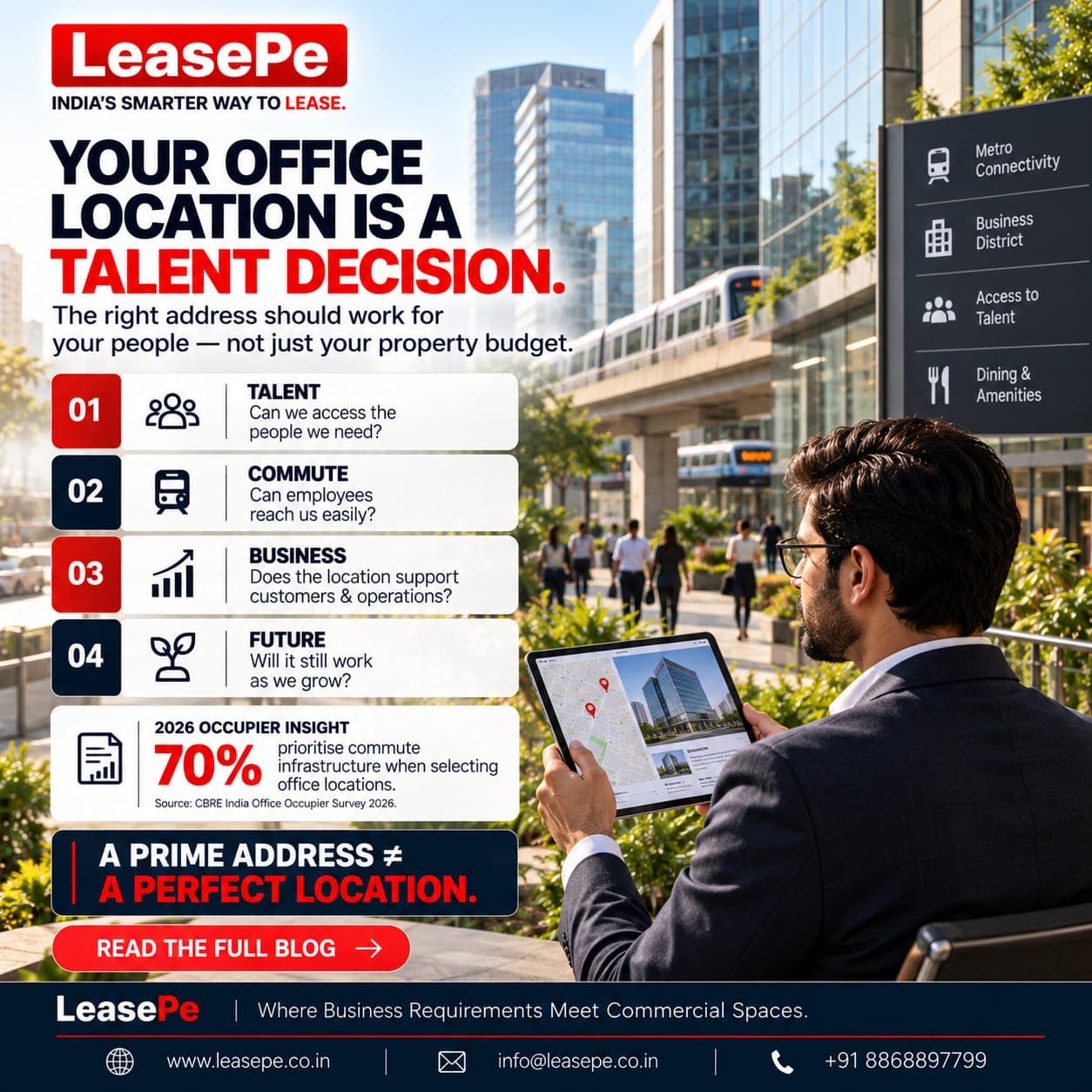
Office Location Strategy: Why Your Commercial Location Is a Talent Decision | LeasePe
Your office location affects more than rent. Learn how commute, talent access, workplace experience and location psychology influence commercial leasing decisions in India.